How to Choose the Right Basketball Club Team in San Diego
Choosing a basketball club team sounds simple until you actually start looking. Then the options multiply fast. One program promises elite exposure. Another talks about development. A third has a polished social media presence, custom uniforms, and a packed tournament calendar. Parents compare fees, coaches, and schedules. Players focus on competition, friends, and the chance to get better. Somewhere in the middle is the decision that matters most, finding the team that fits the athlete, not just the brochure.
San Diego makes that decision more complicated, and in many ways, better. The county has a deep youth basketball culture, strong high school programs, year-round weather that supports consistent training, and a wide range of club options. You can find serious developmental teams, travel-heavy elite programs, neighborhood-based clubs, and organizations that sit somewhere in between. That variety is a strength, but it also creates noise. A family can easily mistake branding for substance or assume the most expensive team is automatically the best one.
The right choice usually comes down to fit across several categories at once: coaching, role, level of competition, time commitment, cost, and the athlete’s actual goals over the next year or two. Not the goals the family hopes for in a perfect scenario, but the ones that match the player’s current stage.
Start with the player, not the logo
The first question is not which club has the strongest reputation. It is what your player needs right now.
That sounds obvious, but it is where many families get off track. A seventh grader who still needs ball-handling reps, confidence, and game awareness may not benefit from joining the most stacked roster in the area. A talented high school guard chasing college recruiting attention may need a more competitive platform than a local-only team can offer. A player recovering from burnout might need a healthier environment and fewer weekends on the road. The right answer changes depending on age, maturity, skill, and motivation.
I have seen players improve dramatically on teams that were not considered flashy because they played meaningful minutes, had a coach who taught details, and trained in a gym culture that demanded discipline. I have also seen good players disappear on loaded rosters where they spent four months watching from the corner and touching the ball twice a game. Exposure matters, but development lasts longer.
If a player cannot yet handle pressure, finish through contact, defend without fouling, or make reads at speed, those issues should shape the decision more than a tournament brand name. The strongest Basketball Club Teams San Diego families choose are often the ones that align present needs with future goals.
San Diego has different basketball ecosystems
One reason families feel overwhelmed is that San Diego is not one basketball market. It is several overlapping ones.
North County has its own club scene and school pipelines. Central San Diego programs may draw from a different pool of players and coaches. South Bay can have a tougher, highly competitive style in certain pockets. Some clubs pull regionally, while others are built around one school district, one facility, or one coaching network. That matters because logistics, chemistry, and competition level are all shaped by geography.
A player living in Carlsbad might be technically joining a strong team in Chula Vista, but the reality of multiple weekday drives through traffic can wear down the entire family by midseason. The reverse is true as well. A convenient local club may save hours each week, but if the training quality is weak, convenience stops being a virtue. In San Diego, distance is never just distance. It is energy, missed homework time, family strain, and recovery.
This is also a county where school basketball and club basketball often intersect in subtle ways. Coaches know each other. Players train with and against each other year round. A club’s reputation for developing players, or for overpromising, tends to spread. Families should pay attention to that local knowledge. Quiet, consistent credibility usually means more than a loud online presence.
Coaching should carry more weight than tournaments
When families compare clubs, they often start with the tournament schedule. That is understandable. It is easy to see and easy to compare. But the tournament calendar should not be the first filter. Coaching should.
A good club coach does more than organize lineups and call out set plays. The best ones teach. They can explain why a possession failed, correct footwork in a way the player can actually use, and create standards that carry from practice into games. They know how to balance accountability and confidence. They also know when a player needs challenge and when that same player needs clarity.
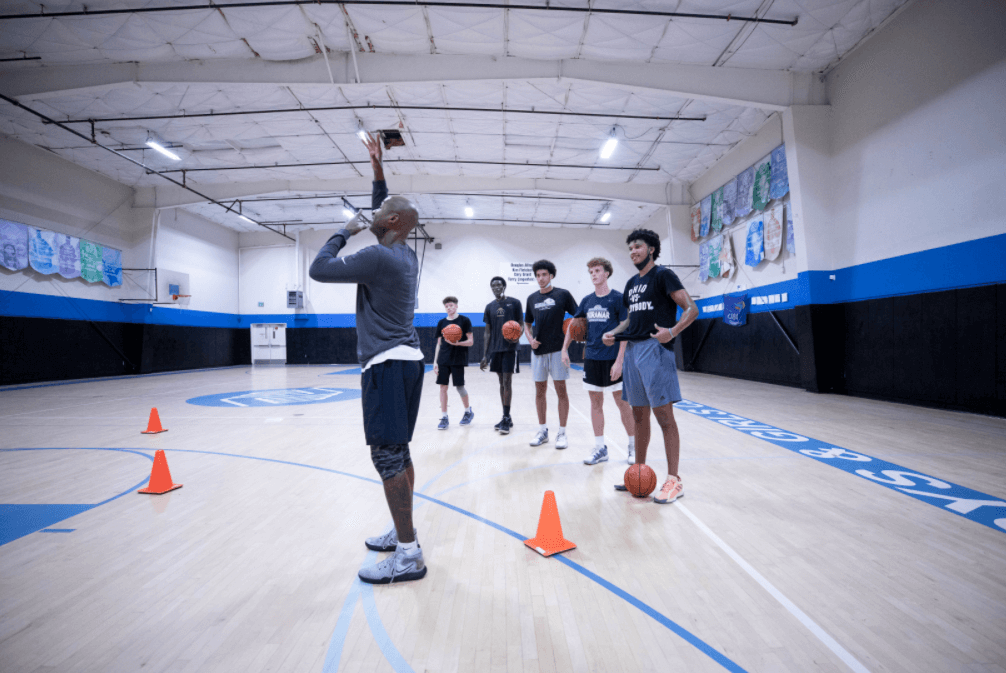
Watch a practice if you can. That tells you far more than an Instagram reel of game highlights. In a strong practice, you will usually notice pace, attention to detail, and purposeful correction. Players are not standing around for long stretches. Coaches are not talking endlessly. Drills connect to game situations. Defense is taken seriously. Mistakes are corrected specifically, not with vague comments like “play harder” or “be aggressive.”
The best coaches also communicate honestly about role and growth. If your player is likely to be the ninth person on a deep roster, a trustworthy coach will say that clearly and explain what the player needs to do to earn more opportunity. Be cautious with coaches who promise starting spots, major exposure, or rapid advancement before they have really coached the athlete. Serious coaches tend to be careful with promises because they understand how much can change over a season.
Development and exposure are not the same thing
This is one of the biggest misunderstandings in club basketball.
Families often talk about exposure as if it creates value on its own. In reality, exposure only helps when a player is ready to benefit from it. College coaches and evaluators notice players who can impact the game, not players who simply attend the right event. A young athlete playing three minutes per game on a premier circuit is not necessarily in a better situation than one playing twenty-four meaningful minutes on a slightly lower platform.
Development comes first. That includes skill work, decision-making, physical readiness, defensive habits, and consistency under pressure. Exposure without those pieces usually leads to frustration. Development without any competitive testing can also plateau. The goal is not to choose between them forever. The goal is to understand which one should be prioritized now.
For middle school players, development should usually dominate the conversation. For younger high school players, the balance starts to shift depending on ability and trajectory. For older high school players with legitimate college potential, competition level and visibility matter more, but only if they are paired with real opportunity and strong coaching.
Families sometimes chase the words elite and national when regional development would serve the athlete better for another year. There is no shame in that. In fact, it is often the smarter path.
Playing time is not everything, but it is not nothing
Some people dismiss playing time as a parent concern. That is a mistake. Playing time is one of the clearest indicators of fit, especially for developing athletes.
A https://sethuksk819.huicopper.com/basketball-club-teams-san-diego-and-the-pursuit-of-excellence player who never sees the floor in meaningful moments loses more than game reps. That player loses the chance to apply coaching, make reads under pressure, recover from mistakes, and build confidence. On the other hand, playing time without accountability can create a false sense of progress. Empty minutes on a weak team do not automatically produce growth.
What matters is the relationship between minutes and challenge. Is the player competing against good opponents? Is the role stretching the athlete? Is there feedback tied to those minutes? A strong club environment can support a bench player if the training is excellent, the communication is honest, and the path to more minutes is real. But if a player is buried on the bench, practices are disorganized, and nobody can explain the rotation, it is worth questioning the fit.
This is especially important in San Diego, where many clubs field multiple teams by age group. Sometimes the second team of a well-run organization is better for a player than the top team of that same club, at least for one season. That is not a demotion if it leads to more growth.
Ask better questions during tryouts
Tryouts are often chaotic, and families leave with a decision before they have gathered the information they actually need. The best way to avoid that is to ask direct, practical questions. Not confrontational ones, just useful ones.
Here are five that matter:
- How many players will be kept on this roster, and how do you see my player fitting into it?
- What does a normal week look like for practices, training, and travel?
- How much individual skill development is built into the program versus game preparation?
- Which tournaments are likely, and how far does the team usually travel?
- How do you communicate with players and parents when concerns come up?
These questions tend to reveal a lot. A coach who answers specifically usually has a clear plan. A coach who stays vague may still be figuring things out, or may prefer to keep expectations blurry. Neither is ideal when you are investing serious time and money.
It also helps to ask current or former families what the experience was actually like. Not whether they liked the team, but whether communication was strong, whether schedules changed constantly, whether players improved, and whether promises matched reality. One honest conversation can save a season.
Cost is more than tuition
Club basketball can be expensive, and the advertised fee rarely tells the whole story.
There is usually tuition, but then there may also be tournament fees, uniforms, practice gear, travel costs, hotel stays, food on the road, private training, and time away from other commitments. Even local teams create hidden costs through gas, parking, missed weekends, and added wear on a family schedule. For programs that travel out of state, the annual total can climb quickly.
That does not mean higher-cost programs are bad or lower-cost programs are better. It means families should look at value rather than price alone. A well-run local program with excellent coaching may offer stronger return than a pricier travel team with weak practices and unclear structure. The opposite can also be true if a player truly needs a higher competitive platform.
Be careful with financial stretching that turns the season into pressure for everyone involved. Kids feel that. If every missed shot starts to carry the emotional weight of a plane ticket and hotel bill, basketball stops being a developmental environment and becomes a family stress test.
San Diego families benefit from being realistic early. Build out the probable season cost before committing, not after the first invoice.
The team culture will show up sooner than you think
Culture can sound vague until you spend a season in a bad one.
A healthy club culture usually has visible traits. Players compete hard without tearing each other down. Coaches correct mistakes without humiliation. Parents support without trying to coach from the sideline. Attendance matters. Effort matters. Role players are respected. Defense is valued. Time starts on time. Nobody acts shocked when discipline is expected.
By contrast, unhealthy culture often reveals itself in small moments. Coaches spend more time blaming referees than teaching. Star players are allowed to coast on defense. Parents lobby for minutes in the parking lot. Practice standards change depending on who is in the gym. Players look tense rather than focused. Those signs tend to worsen, not disappear.
I have watched teams with less raw talent outperform more gifted rosters simply because they trusted one another and accepted coaching. Over a long season, culture is not a side issue. It shapes improvement, resilience, and retention.
If your player leaves a tryout energized, challenged, and eager to return, that matters. If the player leaves anxious, confused, or already worried about politics, that matters too.
Beware of the common traps
Families new to the club scene often fall into the same patterns. They pick the team with the flashiest schedule. They assume more travel equals more opportunity. They choose a roster based on who else made it rather than what the coaching fit looks like. They join too quickly because they fear losing a spot.
A few warning signs are worth keeping in mind:
- guaranteed exposure language without clear developmental substance
- unusually large rosters for one team
- no opportunity to observe a practice or understand the training model
- vague answers about schedule, costs, or player roles
- pressure to commit immediately before families can ask follow-up questions
None of these automatically means a team is wrong. But each one should slow the decision down. Strong programs usually welcome informed families. They do not need to create urgency to hide weak structure.
Different ages, different priorities
A fourth grader, an eighth grader, and an eleventh grader should not be evaluated by the same club criteria.
For younger players, fundamentals and enjoyment still matter a great deal. That does not mean the basketball should be soft or unstructured. It means the program should build habits properly. Footwork, spacing, passing reads, and defensive stance matter more than a national tournament logo at that age.
For middle school players, the picture becomes more competitive. This is where athletes start to separate based on work ethic, coordination, coachability, and genuine love for the game. Club basketball can help, but only if the environment is teaching real basketball rather than just rolling the ball out for games.
For high school players, fit becomes increasingly tied to long-term goals. If the athlete wants to make a varsity impact, the club choice should support that. If the athlete has college aspirations, the level of competition, coaching connections, and team role all deserve closer scrutiny. Even then, there is no one route. Plenty of players earn opportunities by developing steadily, dominating where they are, and moving up at the right time.
That is why broad advice about Basketball Club Teams San Diego can only go so far. The same team may be a terrific fit for one player and a poor one for another, even within the same age group.
When to stay, when to switch
A lot of families ask whether they should remain loyal to a club or move on after a season. There is no universal answer, but a few patterns are useful.
If your player is improving, enjoys the environment, understands the coaching, and still feels challenged, staying often makes sense. Continuity can be valuable. Relationships deepen. Coaches learn how to push the athlete more precisely. Teammate chemistry grows.
Switching becomes more reasonable when development stalls, communication breaks down, promises consistently fail to match reality, or the player’s goals clearly outgrow the team’s level. The key is to separate temporary frustration from structural mismatch. Every serious season includes rough stretches. A bad tournament weekend is not necessarily a reason to leave. A season-long lack of teaching might be.
I usually tell families to review the year through a simple lens. Is the player better? Not just older or busier, but better. Better footwork, better decisions, better conditioning, better poise, better understanding of the game. If the answer is yes, the program likely delivered something meaningful.
The best choice often looks less dramatic than expected
After all the searching, many of the right decisions feel almost understated. The best team is not always the one everyone in the gym talks about. Sometimes it is the program with the disciplined coach, the manageable commute, the honest communication, and the right competitive lane for that player’s stage.
That kind of fit can be easy to overlook because it lacks drama. It may not come with the loudest branding or the broadest promises. But over the course of a season, it usually produces what families wanted in the first place, growth, confidence, resilience, and a player who still loves the game enough to keep working.
San Diego offers enough quality that families do not need to choose out of fear. They need to choose with clarity. Watch the practice. Ask the hard questions. Think about the athlete’s needs before the team’s reputation. Be realistic about money and time. Trust what repeated behavior tells you more than what marketing materials say.
The right club team should sharpen the player and steady the family, not just fill the calendar. When that fit is there, you can usually feel it early. The gym has purpose. The coaching has substance. The role makes sense. The athlete walks out tired, motivated, and already thinking about the next session. That is usually a sign you are close to the right answer.
Lamont Smith Basketball Academy
888 Clairemont Mesa Blvd Suite T-2, San Diego, CA 92123
(619) 639-8778
FAQ About Basketball Club Teams San Diego
How can a player join an LSBA club team?
Players are evaluated during practices so the coaching staff can recommend an appropriate team and development level. Families should contact the academy to confirm current openings and evaluation details.
Are club teams available for newer basketball players?
Yes. LSBA describes multiple levels, including a developmental option for newer players as well as more competitive teams for athletes with prior club experience.
What do LSBA club team practices emphasize?
Practices emphasize basketball fundamentals, team defense, structure, communication, and player development. The specific focus may vary according to the team and experience level.
Do all LSBA teams travel?
Travel expectations vary by level. Some teams focus on local competition, while advanced teams may participate in tournaments elsewhere in Southern California or beyond. Families should confirm the current schedule before enrolling.